TiltViewer requires JavaScript and the latest Flash player. Get Flash here.

Thursday, 18 March 2010

Online trust versus trustworthiness

2 comments


Online trust versus trustworthiness: Which one is more important and effective for marketing efforts in online environment?


For one to comprehend the nature of trust and how it operates it is essential to observe the dimension and situation in the framework of an online environment. According to Gefen. Benbasat and Pavlou (2008), the basis of trust in an online environment is centered on the trustee’s trustworthiness which comprises of integrity benevolence and ability. Previous research pertaining to trust in an online environment has combined trustworthiness and trust, but in fact they are two quite different notions.


According to Xiao Juan Ou and Choon Ling Sia (2009) trust can be defined as the notion in which an internet shopper places a degree of belief in an internet vendor and is prepared to carry out an internet shopping transaction even at the risk of incurring a loss, expecting that the vendor is likely to employ suitable means in delivering the products as promised.

Regarding the distinction or differences between trust and trustworthiness, both concepts involve the perception consumers have towards the company and its employees. Gefen, Benbasat and Pavlou (2008) saw trust as an attitudinal and control belief in which trusting a seller promotes the buyers purchase intentions to engage in a transaction with an online seller. This is made possible by the enhancement of the attitude of the buyer and perceived behavioral control over the outcome of the online transaction performance.

Trust is the general opinion held with respect to a company and its employees whilst trustworthiness provides a particular focus as to how the employees and the organization are viewed by the customers during the period of delivery of a service. A consumer can trust employees of a company but not the company itself which underlines the importance of trustworthiness.

Trustworthiness is said to be an ethical value considered to be a virtue. It concerns the insight of clients towards a company and its employees in the process of service and business delivery. Trustworthiness unswervingly examines the process linked with the effective delivery service rendered by employees and the evaluation of management practices. The more trustworthy an online seller is perceived by its client, the stronger the client’s intention to buy from these sellers (McKnight, Cummings and Chervany, 2008). The intention to buy depends on the level of trust towards the provider which in turn depends on the provider's perceived trustworthiness (Mayer, Davis and Schoorman, 1995). Trustworthiness refers to the person’s perception towards the second or third party, and its ability/ benevolence that he or she is a person or organization of integrity, high credibility and reputation in its dealings. The conceptual foundations of trustworthiness as stated by Ou and Sia (2009) are based on several elements. First is the operational competence which has to do with the ability of employees and management to execute their service to clients. Second is the operational benevolence, i.e. the service provider’s ability to place the consumers’ interest first and foremost, through employee reaction. Third is the problem solving orientation which is the ability of the service provider to anticipate and resolve consumer problems during and after service or purchase, whereby keeping in touch with its customers.

Trustworthiness can be potentially by the employees due to their fast, friendly service and responsiveness, thereby reducing perceived risk to the customer (Buttner and Goritz, 2008). On the other hand, customers may hold a low level of trustworthiness towards the company due the restrictive business processes which prohibit employees from making fast decisions in times of service failures in its transactions with clients. In electronic/online shopping trustworthiness tends to be imperative for its ability towards converting non-buyers or users into users/buyers. When engaging in online transaction customers have to rely on the promises given by the online retailers, in terms of assurance/safety delivery. The more trustworthy an online vendor is perceived, the more likely he or she is to take an actual financial risk towards purchase, and the higher the perceived risks of an online buying and selling, the higher the impact of perceived trustworthiness on intention to buy from a provider. The more risky a transaction is perceived, the more trustworthy a provider needs to be perceived in order to engage in a transaction (Mayer, Davis and Schoorman, 1995). Trustworthiness, on the other hand, involves the organizations capacity to deliver to others, as they expect, and in the process, creates value for the group as a whole. If a consumer perceives no risks at all, the intention to buy should be independent from the perceived trustworthiness of a vendor. Therefore, perceived risk is expected to moderate the relationship between trustworthiness and intention to buy.

Trustworthiness is most important for effective marketing efforts in online business; this is because results have shown that actual purchase and financial risk are both promoted by trustworthiness and this is as a result of the fact that perceived risk was not discovered to mediate the relationship between trustworthiness and the intention to purchase. However, trustworthiness mediated the influence of the perceived risk on intention to buy partially (Buttner and Goritz 2008). This would be helpful for online marketing because when the company is trustworthy this would make the customer to make purchase without having to think about financial risk, that is the purchase was made as a result of trustworthiness.

Thus, if the three factors ability, benevolence and integrity are high the trustee would be quite trustworthy, (Mayer, Davis and Schoorman, 1995). Therefore it is important for an organization to possess those three factors because they all add up to trustworthiness. Furthermore if a high level of trustworthiness exists it is very likely that a high level of trust will be expressed by the customer. The commitment-trust theory proposed by Morgan and Hunt (1994) suggests that when a company has the trust of its customers which from their side perceive the company to be trustworthy a commitment is maintained by both sides. Such commitment is perceived to be beneficial to provider and consumer therefore trust and trustworthiness are both essential in online business development.

REFERENCES

Buttner, O., and Goritz A. (2008) ‘Perceived trustworthiness of online shops’ Journal of

Consumer Behaviour, 7, 35-50

Gefen, D., Benbasat, I., and Pavlou, A. (2008) ‘A Research Agenda for Trust in Online

Environments’. Journal of Management Information Systems 24 (4) 275-286

Mayer, R. C., Davis, J. H., Schoorman, F. D. (1995). ‘An Integrative Model of Organizational Trust’. The Academy of Management Review 20 (3):709-734.

McKnight, D., Cummings, L., and Chervany, N. (2008). ‘Initial Trust Formation in New Organizational Relationships’. Landmark Papers on Trust. Vol. 2: 313-330.

Morgan, R., & Hunt, S. (1994). ‘The Commitment-Trust Theory of Relationship Marketing’. Journal of Marketing, 58(3), 20-38.

Xiaojuan Ou, C., Choon, L. (2009) ‘To trust or to distrust, that is the question investigating the

trust-distrust paradox’ Communications of the ACM, 52(5), 135-139


Read full story

Thursday, 4 March 2010

Why so afraid of Homo Interneticus?

8 comments


When Internet appeared in the1990s most people probably could not realize the changes it was about to bring to their existence and to the society. Another novelty, just a step further in the technological development, maybe even a short-lived fad – shrugging shoulders is one of human’s best tools to deal with unfamiliar things especially with those which he thinks do not concern him. It took less than two decades to alter this view dramatically. Similarly to the invention of the writing systems, the Guttenberg press, the electricity, the telephone and the moving pictures the net of connected computers enwrapping the globe today has forever transformed the way people live their lives. But why are they so afraid to accept this transformation?


It all boils down to the new commodity- information at the speed of light. Never in the human history have the man had to deal with so much information in so little time. Constantly accessing, receiving, processing and assimilating multiple bits of often unrelated data is something the previous generations are still getting used to doing while the new generations born and bred “in the net” cannot even think living without. Three-year old kids surf the web looking for the answer to the teacher’s question, nine-year olds do not want to imagine not being able to read their friends’ updates on a daily basis and at the same time their grandparents still remember times when books, newspapers and telephones were the only means of exchanging information from a distance. And here arises the big divide – as the lifestyles of the different generations become more and more apart how do they communicate and do they even understand one another? This is where frustration sets in and the fear that the groups in the society will become disconnected (ironically, the web aims at providing the ultimate interconnectedness). In fact, the previous achievements of the humankind were not less groundbreaking than the invention of the World Wide Web but the great difference now is the speed with which this new invention penetrated people’s lives. Humans (and all living things for that matter) are designed to adapt to changes but the process is to be gradual and moderate so that they have the time to adjust to those changes.


Twenty years is much less than a lifetime and the clash among the very young, middle-aged and old is so much more apparent and discouraging. People start fearing that the world they know is falling apart- the daily routine is not what it was a few years ago, friendships are not what they used to be, the old way of studying is being opposed to, pastimes are completely new, communicating is done using one’s fingers and not voiceand the list goes on.


Even one of the basic instincts – learning- has utterly different dimensions today. For millennia deliberate learning has been considered a slow process passing through many stages- see, hear, read, absorb, think over, share, discuss, attempt, rethink, accept, etc. However, the information overload from internet is resizing these stages and even completely eliminating some of them. The constant influx of information makes it difficult to process it the conventional way. And so people browse, glance, skim, jump, skip, re-browse… Their brains have to work differently in order to cope with the knowledge pouring out of the web. The attention span shrinks, the absorption becomes less and less deep, the communication becomes more brisk and abbreviated. This inevitably results in the behaviour, which in turns affects lifestyle, relationships and ultimately the whole society. Of course the different generations view this in their own way. And some start to panic. And start to explore and look for answers to explain what is happening, where is the world going and is not this the road to self- destruction.

It is not. It is only another time of change. It happens at more accelerated speed than before but humankind will learn to adapt to fast developments and in the future this pace may be the norm. Internet is just a step in the human advancement and as such it should not be something to be feared. Nobody can predict the future but Homo Interneticus will definitely not be its terminator. “Don’t panic!”*

* Douglas Adams, “The Hitchhiker's Guide to the Galaxy”, 1979


Read full story

Thursday, 25 February 2010

E-marketing for SMEs- necessity or luxury?

16 comments

The business practices of the new millennium differ greatly from the ones established before. This is even more apparent when we look at the marketing.

The marketing of today is not a one-way relationship. It requires almost an equal amount of B2C communication as of C2B communication. Building a trusting relationship with your clients is much easier when there is a dialog rather than when the company just “tells” the client what to like or what to do. Big enterprises with long history have already made different paths through which their customers can reach them and communicate their opinions. Smaller firms, however, and especially new ones, often do not have the means- time, money, human resources and information- to reach all of their audiences via more traditional ways. Internet marketing for them offers the perfect opportunity to build relationships and create loyalty among their clients. Furthermore, it is not only the customers who can acquire more information about the company. The online technology allows the company to research and gather market related information on customers, competitors, and the industry as a whole.


Besides the two-way communication the web also offers more interactive form of relaying information to the consumer. Graphics, music, games, videos, forums, customization- all those and more provide for a closer experience with the product or the brand and make it more approachable and familiar for the potential buyer. Personalized marketing is very much a buzz word nowadays where the multitude of brands on the market and the increasing individualization of the consumer require the companies to thin-slice their target audiences and try to create a special bond with each client.

Moreover, as internet connection extends to more and more places around the globe an online-based advertising campaign can reach existing and potential customers across borders and at very low cost around the clock. This presents the smaller companies with an enormous competitive power. In fact, one the main advantages of e-marketing for the SMEs is that internet reduces the differences between the big and the small businesses. The web allows for a certain type of egalitarianism- everybody is more or less equal online as long as they are creative and willing to be close to and honest with their customers. The transparency of the company’s actions is a double-edge sword but if the business can prove to their prospects that the brand is authentic and ethical it becomes a very powerful reason for the consumers to associate with it.
Finally, the speed of today’s technology allows the companies to change and adapt their campaigns to the needs of their prospects again at a minimal cost.

It is obvious then that it is crucial for smaller companies to actively use internet to develop and further their marketing activities if they are to be competitive in the oversaturated market. Used wisely and creatively the web can be the most important tool for any enterprise to stay afloat in the 21st century.
Read full story

Thursday, 18 February 2010

Our Life in Coventry Univerisity

7 comments
We are not a bunch of bookworms...we enjoy every moment of our lives because only work without play wouldn’t teach us how to bring the best out of ourselves.The clip gives you a peek inside our lives during our stay in Coventry as the students of E-Marketing.....We hope you like it

Read full story

Size matters

9 comments
Calls, IM, internet, e-mail, games, music, file transfer, information search, photo and camera function, shopping, banking, payment, discounts, fun- those are the requirements of the majority of the electronics consumer of today. Luckily they are all available on both PCs and mobile phones.

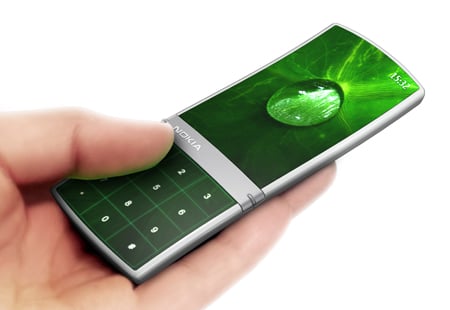
What is stopping the consumer from using a hand-held device and forgetting the heavy-duty computer can be summarized in one word- size. Screen size, keyboard size, memory size, and the speed and alacrity of the device..


It is one thing to browse the web on a screen made in accordance with the human dimensions and another to be forced to strain one’s eyes to read miniature letters and scroll constantly up and down, left and right in order to keep the information flowing.


A picture with little visual content providing fleeting fun or quick data is easy to view on a mobile screen but it is not the case with a full-length video clip or graphically complex video-game.


Whatever the skills mobile phones’ keyboard can never offer the speed and easy use of a computer keyboard. Typing something longer than an sms or a memo on keys as big as baby’s fingernails is a daunting task for even the most experienced Japanese teenager. Memory-wise phones are still a far cry from the storage capacities of modern PCs.


The argument goes vice versa as well. Toting a computer around, however light and slim is not the same as being able to put one’s internet and music in the back pocket and hop on a merry-go-round to take pictures of the surroundings while eating cotton candy.


Size is what everybody is concerned with. Big enough for physical comfort, small enough for unrestrained mobility.


Mobility is a key concept nowadays and Smartphones and netbooks are trying to provide the missing link between computers and cell phones.


Yet, even they are not “smart” enough to look big while being small.


Size still matters as proven by the strong tendency to get as small as possible mp3 players and video cameras while investing in the multi-inch television sets and huge computer game screens.


It can be argued that the debate of PCs versus mobile phones is in its essence actually a debate of the generations.


The “in”-generations preferring to relax, work or play in the comfort of their home or office versus the “out”-generations which would rather be constantly on the move and in synch with everything happening around them.


Researches show the obvious- the youngs are those who play with their hand-helds all the time while the 35+, even though using actively all the available portable technology, take pride in their home theatres.


Flexibility versus comfort, availability versus utility, speed versus breadth, teenagers versus grown-ups.


Even though mobile phones are more and more used for work and pleasure outside of home it is highly unlikely that in a few years time they will replace the HD wide-screen and high capabilities home- and office-used devices.


Portable phones provide easy access to various electronic services on the go but such is the human construction that ergonomic devices are considered those which match up the human frame and provide maximum physical comfort.


Therefore, until the techno gods come up with a foldable computer, the debate seems to be resolved in terms of separating the two technologies rather than trying to merge them.


They both have their advantages and disadvantages thus the argument suggests that they both will have place in people’s life in the future, serving different people in different environments according to their needs and priorities.


Read full story

Monday, 8 February 2010

Hello Everyone

0 comments


Welcome to our blog!

This is a public blog on e-Marketing research made by MA students of Coventry University.

From here, you can get digital marketing help, declaim your ideas---argue and learn.

More research will be given here and please follow us to track more information on e-Marketing and MA students’ life in UK universities.

We welcome you send your own ideas and discuss with us. We will be happy to answer any questions as we believe discussion makes improvement.

We are looking forwards to more debate on hot topics and we will be happy to see your options.

Please share your ideas with us!

For more details about us, please check links on the page head.

Read full story
Disclaimer:Any views or opinions mentioned in this blog belongs solely to its author and does not represent those of Coventry University.
 

e-Marketing Ideas © 2008 Business Ads Ready is Designed by Ipiet Supported by Tadpole's Notez